How to take a spiritual bath without a bathtub

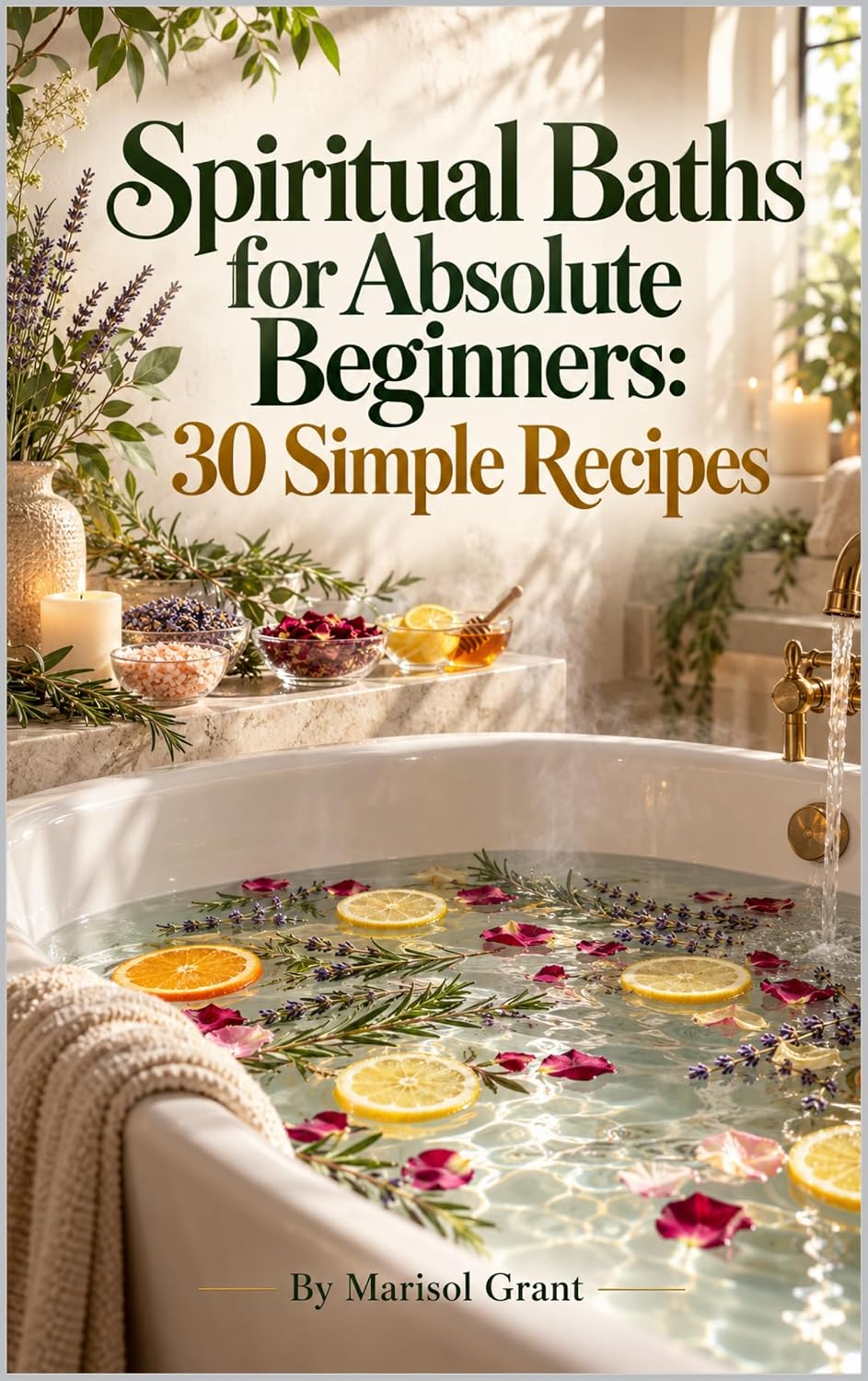
You do not need one. Spiritual Baths for Absolute Beginners treats the tub as optional from the start: bowls, showers, sinks, and foot basins each become the practice space, and every recipe keeps the same intention, preparation, pour, and close as a full bath.

Four no-tub formats

What replaces the tub in each recipe

The book never treats a missing bathtub as a limitation. Each format adapts the same method to a different amount of space, water, and privacy.

Shower pours

When a tub is out of reach, the shower becomes the bath. You prepare your strained infusion, wash normally, and pour the water over yourself in a chosen direction while the shower runs. The book keeps the same intention, preparation, and close as a full bath, only the vessel changes. A shower pour is also one of the three quick formats for days when time or privacy is limited.

Foot basins and foot soaks

A foot basin turns a corner of any room into the practice space. The basil-and-bay foot soak marks the return from a stressful setting, and a peppermint foot soak pairs a brief pause with attention to everyday sights, sounds, and sensations before asking you to choose one small task. One recipe can even be prepared the previous evening for a seamless close to the next day.

Sinks and hand-and-face washes

The discreet hand-and-face wash is designed for shared bathrooms, offices, and travel: a small bowl or the sink itself, a brief infusion, and a few unhurried minutes. It is the quietest option in the book, and it still follows the full method from intention to close.

Bowls

A simple bowl handles steeping, straining, and pouring for most no-tub recipes. Combined with a kettle, a strainer, and a towel, it is enough equipment for nearly the whole book, which is why the supply list for beginners stays short and inexpensive.

Reader question

How do shower pours differ from spiritual foot soaks?

In space and equipment: a shower pour uses the shower you already have and a container for your strained preparation, while a foot soak needs only a basin of warm water set anywhere you can sit comfortably. The foot soak is the more private and portable of the two; the shower pour covers more of the body.

In preparation and timing: both follow the book's consistent recipe format, but the book includes a foot soak you prepare the previous evening, so the practice itself takes only minutes the next day. A shower pour fits into a shower you were taking anyway.

In focus: the peppermint foot soak, for example, narrows attention to everyday sights, sounds, and sensations, then asks you to choose a small task. A shower pour keeps the full upward or downward pouring symbolism of the bath tradition, which a foot soak expresses more quietly.
Getting started

If you are assembling what you need for a first attempt, the supply list is deliberately modest: a bowl, a strainer, and ingredients most kitchens already hold. The book's substitution rule also applies here: plain water can replace any ingredient that is unsuitable for you, so a small bathroom is never a barrier to starting.

Thirty recipes, zero bathtubs required

Every practice in Spiritual Baths for Absolute Beginners adapts to showers, sinks, bowls, and foot basins, with clear steps and honest expectations.

View the book on Amazon